
What Is Industrial Scrap Processing? A Guide for Manufacturers
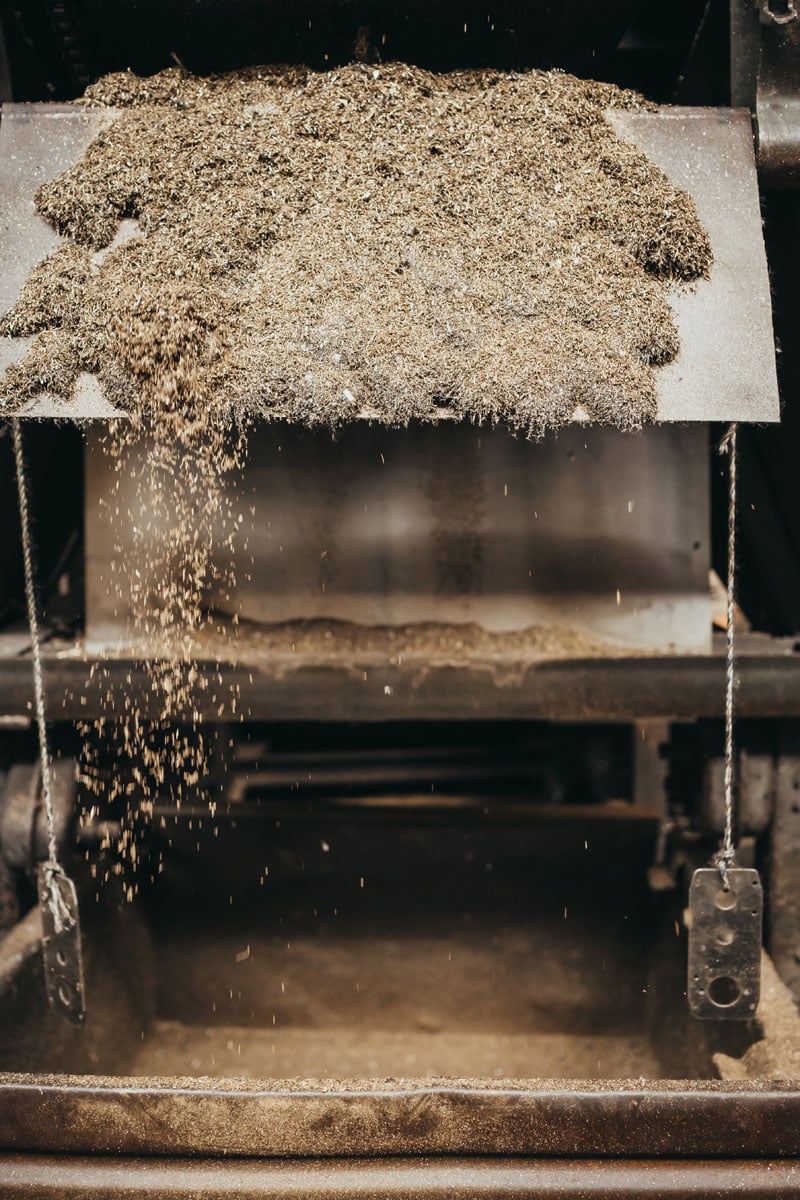
Be honest — scrap metal probably isn’t something you spend a lot of time thinking about. It comes off the machine, goes in a bin, and gets hauled away. As long as the pickup happens and a check follows, it’s handled.
What happens between that bin and the end consumer who buys your material determines how much you actually get paid for it. Done well, industrial scrap processing maximizes the value of your metal byproducts, contributes meaningfully to your bottom line, and runs quietly in the background without disrupting production. Done poorly, or not at all, it costs you money on every load without you ever knowing it.
So what actually goes into industrial scrap processing? And why does it matter more than most manufacturers realize? Here’s a plain-language breakdown.
What Is Industrial Scrap Processing?
Industrial scrap processing is what has to happen to a metal byproduct before it’s ready to be sold to an end consumer — typically a mill or foundry that will remelt and reuse the material.
In an ideal world, scrap arrives at a processor’s facility already segregated by alloy, cleanly packaged, and correctly identified. When that happens, the processor can move it quickly and efficiently straight to the right buyer. Simple, fast, and most importantly, maximum return.
In practice, that’s rarely how it goes. Roughly 90% of incoming loads require at least one processing step before they’re ready to move. Sometimes it’s as minor as repackaging material onto a skid. Sometimes it means cutting oversized pieces down to mill spec, running material through a magnet separator, or testing individual pieces with an alloy analyzer to sort what looks like identical metal into separate grades.
The capability to prepare material correctly, and the relationships to get it in front of the right buyers, is what separates a scrap program that maximizes your return from one that just moves metal.
Why Industrial Scrap Processing Affects Your Payout
Mills and foundries have specific requirements for how they accept recycled material, based on the price they are willing to pay. Size, form, packaging, cleanliness, and in many cases, alloy chemistry. Meeting those specs is the difference between getting top-end pricing and getting a downgrade.
The numbers tell the story pretty quickly. At the time of this writing, clean, correctly identified aluminum can be worth close to two dollars a pound. Steel runs around 20 cents. Those materials have different buyers and different price points, so when they land in the same bin, you’re already leaving money on the table.
Ferrous and non-ferrous materials have different buyers and different values. The moment they end up in the same bin, you’re no longer selling two distinct products at their respective market rates. You’re selling a mixed load that nobody wants to pay top dollar for.
That mixed load now requires processing to separate. You’re paying for labor and equipment time just to get back to square one. Even after separation, if the aluminum can’t be fully cleaned up, it may have to be sold to a secondary market at a significant discount. And the steel? It was already worth 20 cents. So you’re looking at a hit on both ends.
And it’s not just about keeping steel and aluminum separate; that is just one example out of thousands. Taking it a step further, even within “aluminum” materials, segregation matters. Two pieces of aluminum sitting in the same bin can be entirely different alloys with entirely different buyers and entirely different prices. When those alloys are kept separate, each one can be sold to the end consumer who pays a premium for that specific chemistry. Mixed together, they become a blended, lower-value product with fewer buyers and a lower price.
A scrap processor that understands this and has the relationships with the right end consumers to act on it is going to return more money to you.
Common Industrial Scrap Processing Steps, Explained
“Processing” covers a lot of ground. Here’s what it actually looks like in practice:
Cutting and Sizing
Most mills and foundries have a maximum size requirement for incoming material. Eight-foot pieces are generally considered oversized — the industry standard is generally closer to four to five feet. Material that comes in long lengths has to be cut before it can be sold at full value. It’s a straightforward step, but skipping it means either taking a price reduction or losing the sale to a buyer who won’t accept it as-is.
Separation and Cleaning
Ferrous and non-ferrous materials mixed together need to be separated before either can be sold at full value. Magnet systems are the most common tool here — pass the material through, and the iron pulls out, leaving the non-ferrous material cleaner and worth more. It sounds simple, but it takes time, equipment, and attention to do it right.
Alloy Testing and Segregation
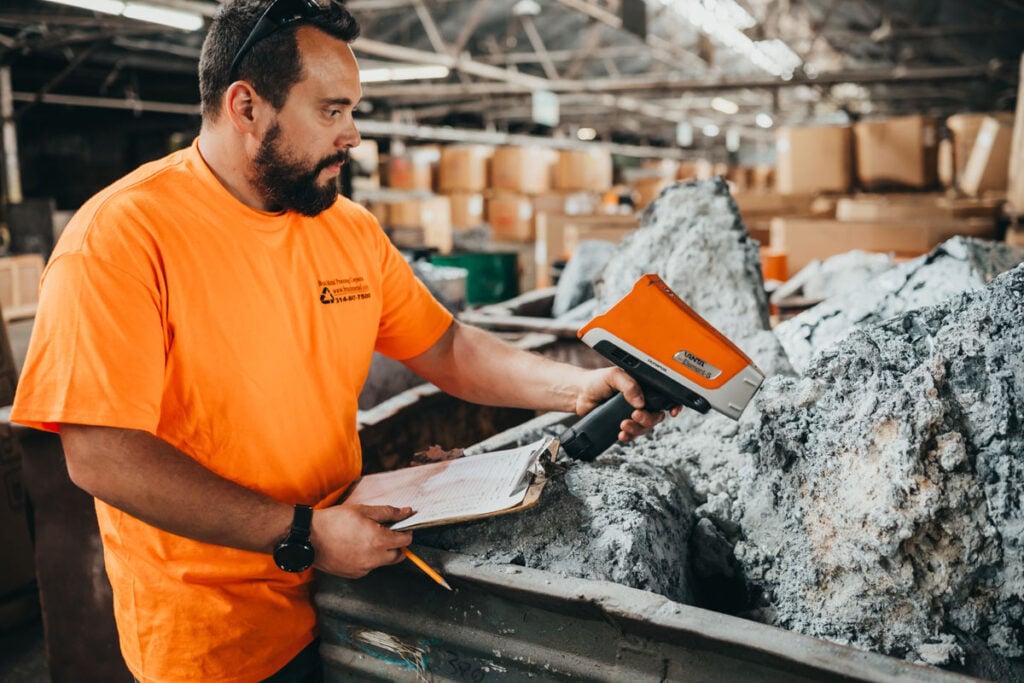
This is where a lot of value gets left on the table by scrap programs that aren’t paying attention. Using a chemistry reading gun (sometimes called an alloy analyzer), a processor can test individual pieces of non-ferrous material and identify the exact alloy — even when two pieces look identical to the naked eye. That information allows material to be sorted by alloy and routed to the specific end consumer who pays a premium for it. The difference can be significant: segregated alloys sold to the right buyer can return premium pricing; the same material mixed together goes to a secondary market at a discount.
Repackaging and Spec Compliance
End consumers have preferences for how material arrives. Some want Gaylord boxes. Some want material on skids. Some have documentation requirements. Getting packaging right is part of the job because a load that shows up in the wrong packaging can be rejected or downgraded, regardless of the quality of the material inside.
Quality Inspection
Before material ships to an end consumer, it needs to be checked against their requirements. Contaminants, size, form, chemistry — anything that’s off gets caught here rather than at the destination, where a rejection costs everyone time and money.
How Your Facility’s Setup Affects Industrial Recycling Outcomes
What happens on your floor before scrap is ever picked up matters as much as what happens at the processing facility. One of the most common missed opportunities seen on facility walkthroughs: no intentional segregation at the machine level.
When everything goes into one bin, you’re creating a mixed load that costs money to separate and sells at a lower price. When material is segregated by type or alloy at the source, right at the machine where it’s being produced, it arrives at the processor clean, identified, and ready to go to the right buyer. Less handling, less processing, more money back.
This doesn’t have to be complicated. One approach that works well: color-coded bins that match the material identification system already in use on the floor. If your operators refer to one titanium alloy as “red” and another as “green” for internal tracking, labeling scrap bins the same way means they don’t have to learn anything new. Red goes in red, green goes in green. Operators don’t need to know alloy chemistry. They just need to know which bin is which.
Small adjustments like this upstream lead to cleaner loads, simpler processing, and measurably better returns. And the less work a processor has to do to get your material ready for sale, the more of the value stays with you.
What to Look for in an Industrial Scrap Partner
Your scrap program is only as good as the partner running it. A company that’s just moving volume isn’t necessarily thinking about which end consumer will pay the most for your specific material — or whether a small adjustment to your facility setup could put more money back in your pocket.
A good industrial scrap partner knows the end consumer landscape well enough to route your material to the buyers who will pay the most for it, not just whoever will take it. They communicate clearly when something doesn’t match expectations instead of quietly adjusting your payout. They come into your facility, look at what you’re producing, and help you set up a program that actually makes sense for your operation. And they pay fairly, pay on time, and make the whole thing as simple as possible.
Scrap recycling doesn’t have to be complicated. But the details matter, and a partner who understands them can make a real difference in what ends up back in your pocket.
Ready to Get More Out of Your Scrap Program?
Metal manufacturing is complex. Your scrap recycling program doesn’t have to be. Branch Metal specializes in industrial scrap solutions for manufacturers across the St. Louis region — straightforward service, accurate measurement, transparent pricing, and a genuine focus on maximizing what you get for your material.
Schedule a facility walkthrough, and we’ll take a look at your operation, identify what’s working, and show you where there’s room to do better. No pressure, no complicated pitch. Just a practical conversation about your scrap. Schedule your scrap walkthrough today.