
Scrap Metal Handling Equipment Explained: Lugger Boxes, Totes, Hoppers, and How to Choose the Right Setup
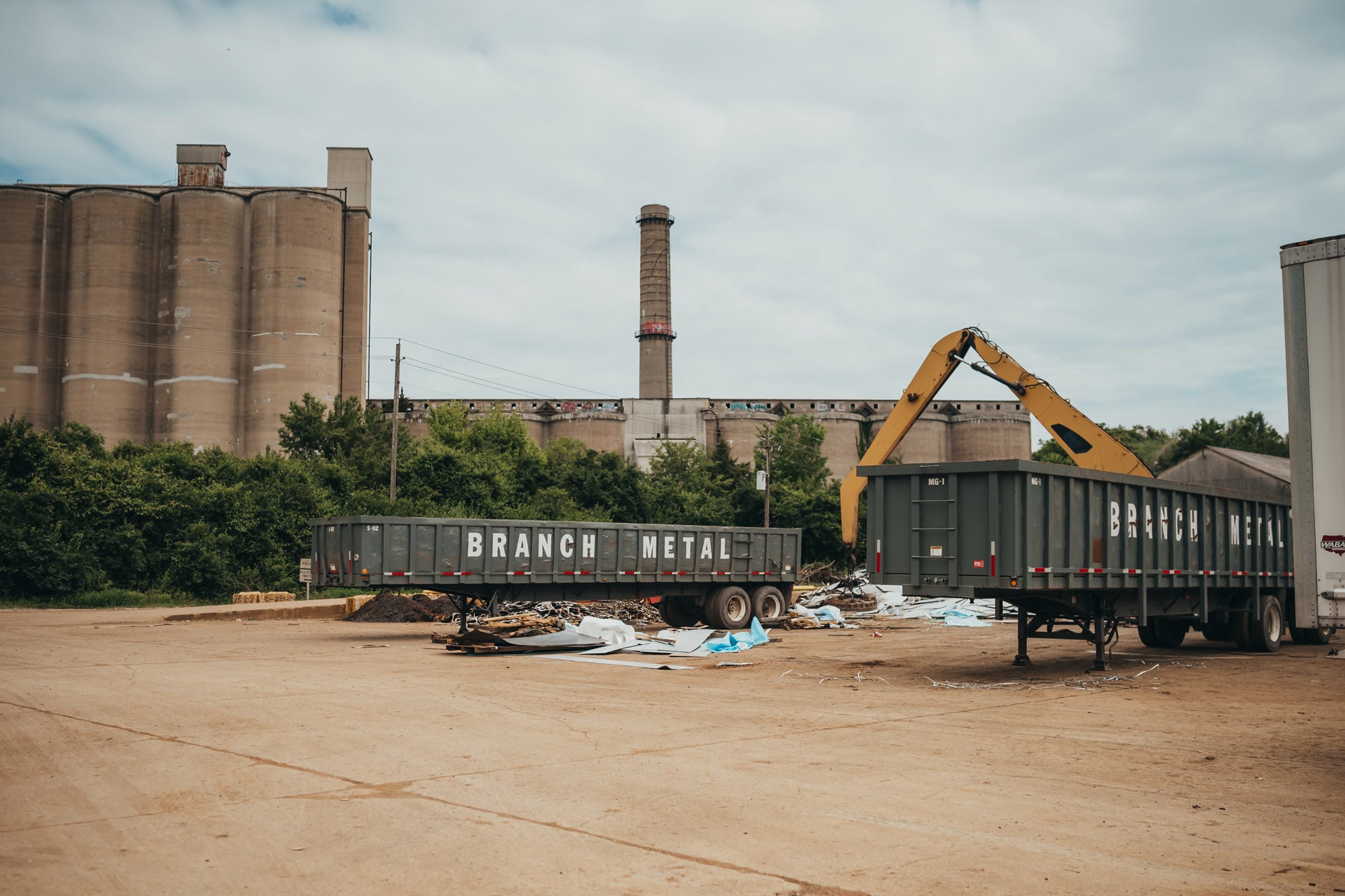
Scrap handling doesn’t have to be complicated. The right equipment at the right points in your facility means material moves cleanly from the machine to pickup without extra handling, contamination or headaches.
This is a practical breakdown of the most common scrap metal handling equipment, how each piece fits into your overall material flow and how to figure out what setup actually makes sense for your operation.
Why Scrap Metal Handling Starts at the Machine
The fundamental principle of any good scrap program is simple: scrap should go directly from the production point into a container. The less it touches the floor or requires manual handling, the better.
Think about it from a labor standpoint alone. If a machinist runs a saw and the chips fall onto the ground, someone has to sweep them up, then shovel them somewhere, then move that container to wherever it gets picked up. You’ve just turned a one-step process into a three-step process, and you’ve probably mixed in dirt, coolant residue and whatever else was on the floor in the process. That contamination affects your scrap value.
The goal is to capture scrap at the source, accumulate it efficiently and move it to a bulk container without unnecessary handling. The equipment you choose at each stage determines how smooth or how frustrating that process is.
That flow typically looks like this: scrap falls off the machine into a collection point (a hopper or tote box), gets accumulated until it’s time to move it, then transfers to a larger container for pickup. Get that flow right and scrap practically manages itself. Get it wrong and your operators are spending time on material handling that has nothing to do with making parts.
The Equipment Breakdown: A Guide to Scrap Metal Handling Options
There’s no single piece of equipment that works for every operation. What you need depends on your volume, your floor layout, your material type and how your team actually moves around the facility. Here’s how the most common options work and where each one fits.
Self-Dumping Hoppers
A self-dumping hopper sits right at the machine or cutting table and catches scrap as it falls. When it’s full, a forklift picks it up and the operator pulls a lever that releases the load, tipping it into a larger container, usually a lugger box or trailer outside.
These are ideal for operations where scrap is generated at a central point and you want to reduce manual handling as much as possible. Your operator runs the machine. Scrap falls in. When the hopper is full, it gets dumped and returned. Nobody is shoveling or sweeping.
If you’re running machining operations with cutting fluid involved, make sure your hoppers have drain valves. Coolant is expensive and, depending on your operation, EPA is not going to be happy about it pooling on the floor. A hopper with a drain valve lets you capture and recycle that fluid instead of disposing of it or dealing with a mess.
Tote Boxes
Tote boxes are the workhorses of most scrap programs. They come in metal and plastic, a range of sizes and stackable configurations, and they’re versatile enough to work at the machine level or as a primary collection method when lugger boxes aren’t the right fit.
Metal totes are durable, handle heavier loads and hold up in rougher environments. Plastic totes are lighter and easier to move by hand. If you’re running a smaller machine shop without forklifts on the floor, plastic makes a lot of sense. Your operators can push them around without waiting for equipment.
Size selection matters more than most people realize. If you’re generating dense, heavy material like steel turnings or thick plate drops, a large tote will get dangerously heavy before it looks full. That’s how you end up with operators straining to move overloaded containers, or worse, someone getting hurt. Smaller boxes force more frequent changeouts but keep everything manageable and safe.
Stackable totes are a good option when floor space is limited. If you have three different alloys being generated in the same area and not a lot of room, you can stack two or three totes in a single footprint and keep materials separated without taking over the floor.
Lugger Boxes (Lugger Containers)
Think of a lugger box like a roll-off dumpster for scrap metal. It’s the bulk container in the flow, typically sitting outside or in a staging area, and it collects material that’s been transferred from hoppers or tote boxes throughout the day or week.
When a lugger box is full, a specialized lugger truck comes in with a chain-and-bar system that pulls the full box onto the truck, hauls it back to the facility and dumps it. If you’ve ever watched a trash truck pick up a dumpster, it’s a similar concept. The driver sets down an empty box and takes the full one. Your operation keeps moving without any downtime.
Lugger boxes work well for mid-to-high volume operations where tote boxes alone aren’t enough to keep up. Instead of having 14 tote boxes lined up waiting to be picked up, you’re funneling everything into one large container that gets swapped out in one trip.
A few optional add-ons worth knowing about: lids can be added for facilities where theft is a concern or where the box sits outside and weather is a factor. Leak-proof configurations are available for operations dealing with coolant-soaked material. Chain and lock fabrication is something we handle on a custom basis when the situation calls for it.
One note on equipment design: Branch Metal builds all of its containers with double fork channels. That allows our drivers to use rotating forklift attachments, meaning when material comes back to our facility, we can process it more efficiently without extra handling on our end. It’s one of those small details that makes a big difference at volume.
Spotted Trailers
For higher-volume operations, we can spot a full trailer directly at your facility. You dump material into it as it accumulates and we send a truck to swap it when it’s full. It’s the highest-capacity option and reduces the number of individual pickups, which keeps freight costs down.
Spotted trailers work best when you’re generating enough volume consistently that a lugger box fills up too quickly. For most operations, lugger boxes or totes are the right call. But if you’re running high-volume production, a trailer on-site may make more sense logistically.
Drums
Drums are the old-school option. They were the industry standard 40-plus years ago and some facilities still use them, particularly for specialty materials or situations where smaller, portable containers are needed. They’re not the most efficient option for most modern scrap programs, but they have their place.
Equipment Details That Affect Your Scrap Program (And Your Return)
Choosing the right equipment isn’t just about which container is the right size. A few specific considerations have a direct impact on what you get paid and how smoothly your program runs.
Volume and Weight Optimization
The goal of any pickup is to maximize the weight we can haul per load. Freight is a real cost in this business and the more efficient we can be with each trip, the better the economics work for you. If we’re sending a truck to pick up a half-full lugger box because the container is too small for your volume, that cost shows up somewhere. Getting the equipment sized right means we’re picking up full loads, keeping costs down and passing that efficiency on to you.
Leak-Proof Totes and Drain Valves
If you’re running machining operations where cutting fluid is involved, this matters. Standard containers with gaps or holes will leak coolant directly onto your shop floor. That’s a housekeeping problem and, depending on your state’s environmental requirements, it can be a compliance issue. Leak-proof totes with drain valves let you capture that fluid, and if your operation supports it, you can run a tube back to your machine and recycle it. Coolant is expensive. Recovering it instead of losing it to the floor is worth the conversation.
Equipment Condition and Safety
Beat-up equipment with sharp edges or structural damage isn’t just an eyesore. It’s how people get hurt. We weld, refabricate and repaint our equipment to keep it in good, safe working condition. Some of our containers are 30 years old, but they’re maintained. We also factor safety into sizing. If there’s any chance your team might overload a container because it’s the only one available, we’d rather give you more boxes than set up a situation where someone gets hurt trying to move something too heavy.
How to Choose the Right Scrap Metal Handling Setup for Your Facility
There’s no universal answer here. The right setup depends on your volume, your floor layout, your material type and whether you have forklifts or are moving things by hand. A few questions we always ask when walking a new facility:
- Where is scrap being generated, and how much? One machine with low volume needs a couple of tote boxes. Twelve machines running all day needs a system.
- Do you have forklifts on site? If yes, hoppers and metal totes work great. If your team moves things by hand, plastic totes are lighter and easier to manage.
- Is coolant mixed in with your material? If so, leak-proof containers with drain valves are non-negotiable.
- Are you running multiple alloys that need to stay separated? You’ll need labeled containers at the machine level. Mixed material means lower pricing, every time.
- How much staging space do you have? Space constraints drive more equipment decisions than most people expect.
The best way to figure out what fits is to walk the floor and talk through it. That’s exactly what we do.
We’ll Walk the Floor With You
Getting the equipment right is the foundation of a scrap program that runs cleanly and pays well. It’s also one of those things that’s a lot easier to figure out in person than on paper.
At Branch Metal, equipment is part of the service relationship. We provide it, maintain it and swap it out when it’s time for an upgrade. We don’t hand you a catalog and tell you to pick. We come out, look at your operation and work through the options with you until we land on something that actually fits.Not sure what setup makes sense for your facility? Request a plant audit and we’ll come walk the floor with you.